
After your procedure
How to care for your wound, and what normal healing looks like.
Washing and bathing
- You may wash and shower normally starting the day after your surgery.
- Be gentle: do not scrub the area, and pat gently to dry.
- Do not submerge the wound. Avoid baths and pools until it is completely healed, about 3 to 4 weeks.
Ointment
Apply Vaseline twice a day or more to keep the wound moist. Moist wounds heal better than dry ones, with less scabbing.
We do not recommend Polysporin. Vaseline keeps the wound just as moist and costs less. The antibiotics in Polysporin do not help a clean surgical wound heal faster, and they can cause a skin allergy.
Once the wound has healed
Healing takes about 3 to 4 weeks. After that:
- Makeup. You can put makeup directly on the scar.
- Sunscreen. Start putting sunscreen on the scar, and keep it on at all times. A scar exposed to sunlight can turn a brown colour that is very visible and permanent; applying sunscreen diligently avoids this.
- Massage. You can start massaging the scar. This may help soften the stiff new scar tissue, so that it becomes smoother, flatter and more flexible.
We do not routinely recommend scar-reduction products. Scars explains why, and lists the treatments available.
Instructions for your procedure
What normal healing looks like
It is normal for a wound to be somewhat red, bumpy or puffy for the first few weeks to months after surgery. As it heals it should improve until it looks close to normal skin. Scars explains how a scar changes over the first year.
After surgery


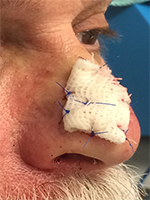
Skin graft healing



Skin checks after a skin cancer
Once you have had one skin cancer, you are more likely to develop another. See your doctor for a skin check every 6 to 12 months, so that anything new or recurring is caught early.
If you have had several skin cancers, or even a single melanoma, you may benefit from being followed by a dermatologist. Your doctor can refer you.